WIP: Baby Blanket 2

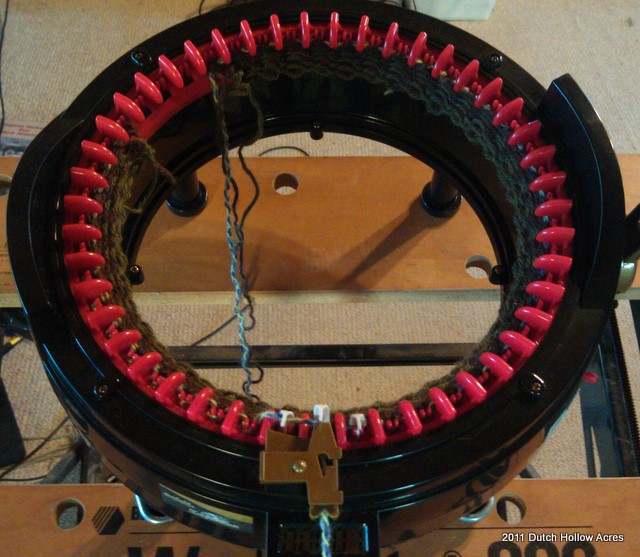
I’ve been able to spend some time playing with my new toy the Addi Express King Size.

I’ve made many hats on it but I’m tackling my first panel project.  It turns out panels are a lot more tricky for a few reasons.

  1. When turning to reverse directions the stitches like to slip.
  2. The counter is flaky with panels
    1. If you’re trying to catch or fix a potential dropped end stitch you can double or triple count by accident
    2. If you’re feeling frisky and mastering your turns you could turn before the counter has a chance to register.
  3. I’ve also learned to start and end my projects with waste yarn so picking up the stitches later is a snap.  That way I can bind off using my own techniques or add other stitches like ribbing.

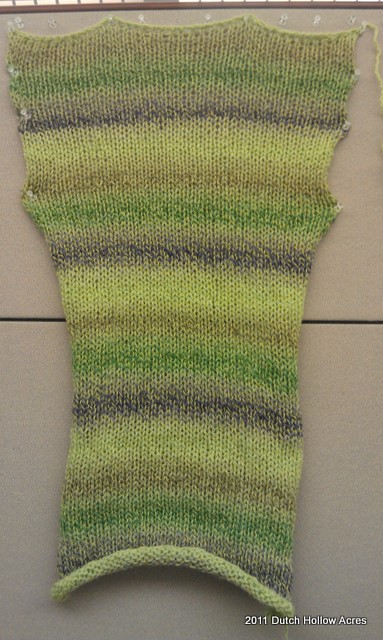
Here’s my first panel which is one of 2 and then I’ll finish the blanket with a nice crochet border.

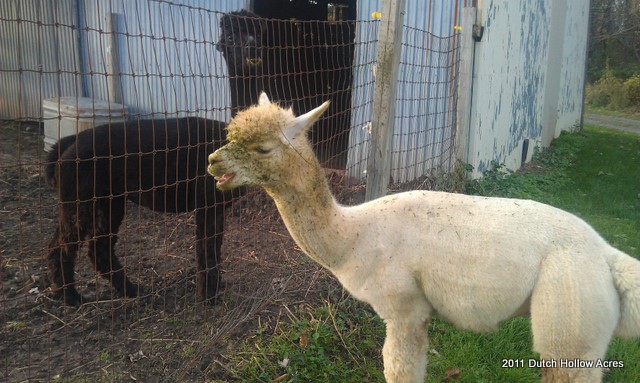
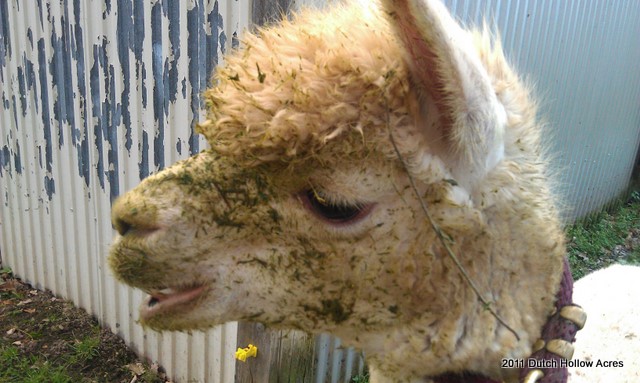
On a funny note here’s a photo of my herd sire Alejandro.  He had managed to belly crawl under the fence and went over to use his new pickup lines on the ladies.  Unfortunately for him all the ladies have been bred already and well the spitting ensued.  Apparently he wasn’t taking no for an answer because by the time I found him he was covered in spit.

Herd Management Practices to Promote a US Alpaca Meat Industry

When alpacas were first brought to the US they were marketed as a huggable no kill investment.  Unfortunately with the down economy prices are plummeting and costs are rising, the “unwanted alpaca” is becoming a big problem that no one wants to talk about.

As a responsible breeder my goal is to breed for our emerging fiber market (meaning my herd is 90% white/beige and 10% black in color). Like many breeders I strive for the cria to be better than the dam.  Female cria can usually be bred up leaving the boys to sit around, jobless. Like in the sheep/goat industry you just don’t need that many studs.  Only a select few are of high enough quality to breed a better cria leaving a lot of boys out there without a job.

Culling:

The livestock definition simple: To remove an inferior animal from a herd.

As a breeder it means I have a duty to remove an alpaca that is not of breeding quality from the gene pool by castration or consumption.

International Solutions:

If you look to the wool leaders of the world, Australia and New Zealand have already been marketing the La Viandé as a brand for alpaca meat as part of their emerging alpaca industry.  Let us also not forget that in South America camelids are not only raised for their fiber but also for meat which is widely available.

I truly believe a meat market is needed in the US for a few reasons.

    1. To help keep the “bottom” sales price for an alpaca at a level where a profit can still be realized.
    2. To bring sales of seed stock and stud fees to a level in line with other livestock of similar marketability such as sheep and goats.
    3. To increase quality of fiber available in the market

Herd Management Changes:

As of 2011 these are changes I’m making in my herd management practices.

–       I will no longer be purchasing a breeding unless it comes with a female cria guarantee

–       All non-breeding alpacas will be available for purchase until 24 months of age in 2 categories Pet or Meat.

    • Pets – will not be registered unless requested and will be castrated before leaving to their new home.
    • Meat – the alpaca purchased will be sent to a facility licensed and inspected to process the whole animal into cuts labeled “not for resale” and the vacuum packed and frozen cuts will be sent directly to the buyer.

–       Non-Breeders older than 24 months will be processed for meat.

    • Currently I am searching for a local USDA processor that is licensed to sell cuts for individual resale who doesn’t freak out at the word “alpaca”.

–       3-6 months before “processing” all alpacas will be moved to an organic lifestyle to detox and will be shorn no less than 4 weeks before “processing” for better fur quality.

–       To educate myself further on USDA regulations for processing alpaca meat for public consumption.

Alpaca Meat:
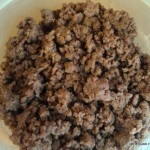
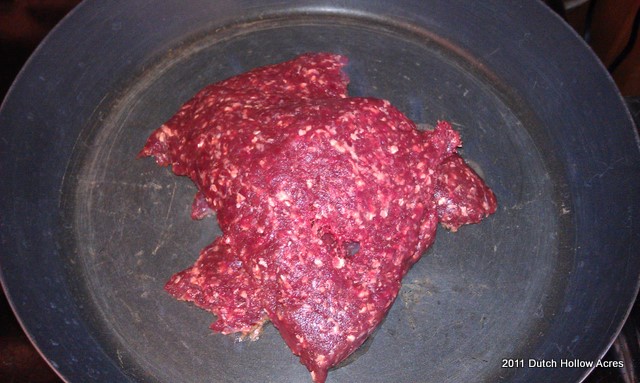
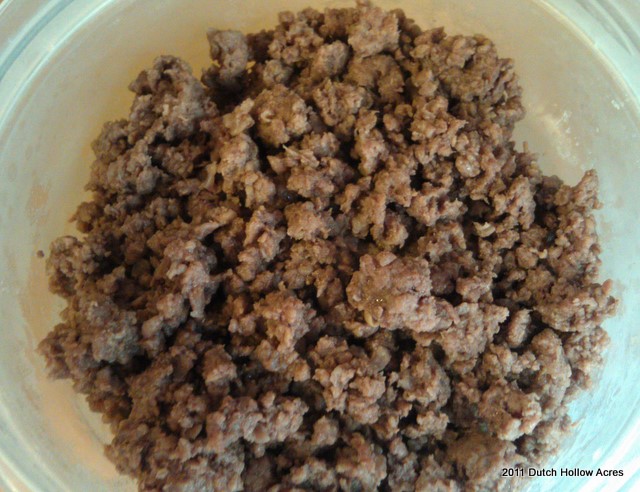
If you haven’t tried alpaca yet I highly recommend it.  To me the look and taste mostly resembles beef with a few of the cuts looking more like pork.  Alpaca meat is incredibly lean with practically half the calories, cholesterol and fat of beef with the added benefits of being high in Iron and Vit A.   It has totally replaced all beef and pork in my household and is very popular with guests.

End Note:

The irony of me writing this post is that I have been blessed with female cria these past 4 years.  At my current herd state I do not have any alpacas that would be sent off to slaughter.  I love my alpacas and even I have my select few that will always have a home even if they never sell.

I have also been very successful in re-homing alpacas as fiber pets and I am the main resource for re-homing alpacas at our local humane society’s farm.

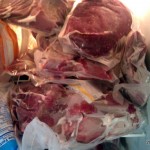
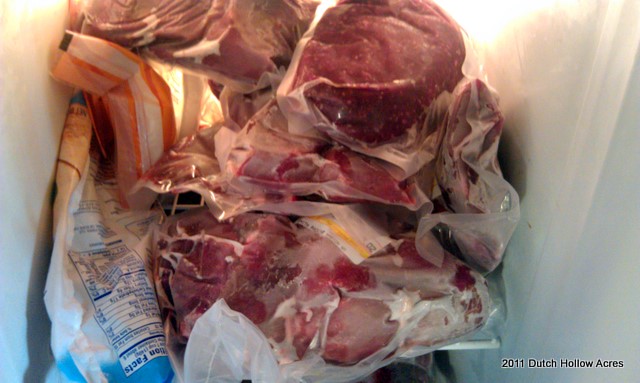
Currently, the only alpacas I’ve culled for consumption went into my own freezer.  However, I have a plan and resources ready for when the time comes.

I fully believe that La Viandé could easily be accepted by the US pallet.  We just need to educate ourselves as breeders and work hard to promote it properly.

**Constructive discussion is welcome but hostile comments will not be permitted.

Fiber Arts Friday: Economy

Hey Fibery Fans!

So economy wise everything went to hell back in 2008-ish but this is the first year I’m actually feeling it.   When things crashed people cut back and shopped locally and vacationed locally so my business actually picked up.  Last year I felt a bit of a dip but this year has been an out right drought!

Usually for craft shows I’ll stock up on all the usual alpaca goodies like hats, mittens, gloves, scarfs, socks etc and will be practically sold out by now.  This year I haven’t even made 1 reorder of any of the staples and can’t even sell the left overs from last year.  The shows that I’ve gone to that usually put me in the black have ended up costing me because I couldn’t sell enough to cover the cost of the booth, travel, inventory etc.   My hubby keeps telling me we’ll pull out of this funk in 2012 so I’m not going to totally freak out just yet.

1 of only 3 sales I made at a craft show this past weekend.

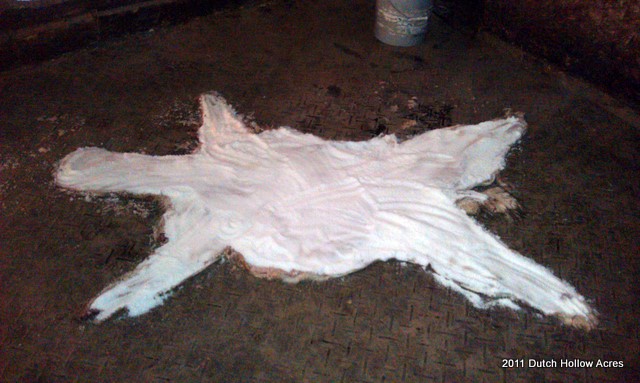
Since I’ve been sick like a dog this week I really don’t have much to share fiber arts wise.  Sniffling, sneezing, coughing and crocheting really doesn’t mix well.  I prefer not to germ up anything I will potentially sell to a customer.   Which means the only fiber project I currently have been tending to is an alpaca hide I’m drying.    The weather has been so darn wet and crappy this month that the thing just won’t dry.  Usually I salt them out in the barn but the salt has been sucking up all the humidity from the air and bringing it to the hide instead of taking it away.  So, at the moment the salted hide is drying in my basement next to a dehumidifier.  In another week it should be dry and ready to send off to Sivko Furs for tanning and to be made into a blanket.   For more information on how to preserve an alpaca hide read this post.

FAF: Mini Skein Ornaments

Hello everyone!  Welcome back to Fiber Arts Friday.

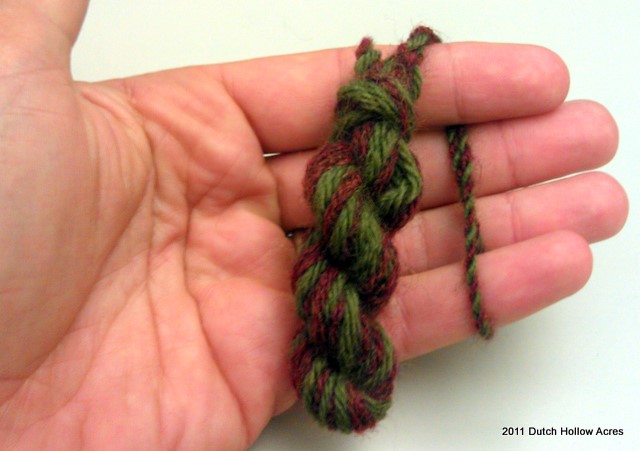
Today I have a little tutorial for you to make these little skein Christmas Ornaments.  When complete they are about 4″ long and come with their very own hanging loop.

If you want any close ups, just click on the photos.  So here we go!

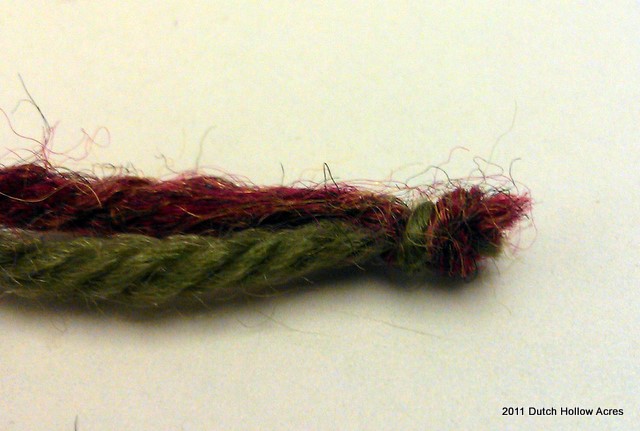
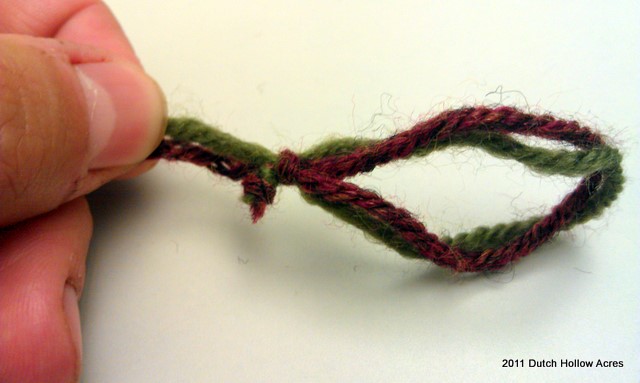
Step 1: Using worsted weight yarn pick 2 colors you like and tie a knot at the end, trim up any dangles .

Step 2:  Tie a slip knot right up close to your previous knot.

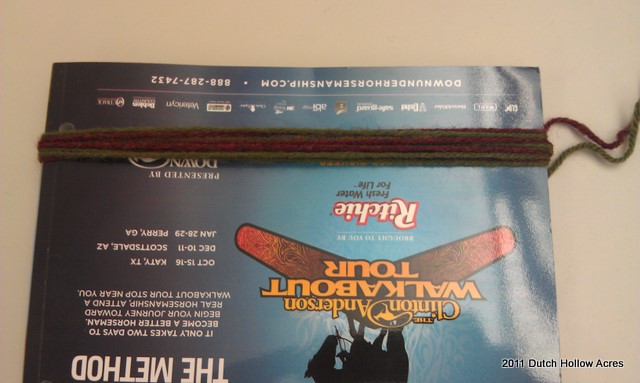
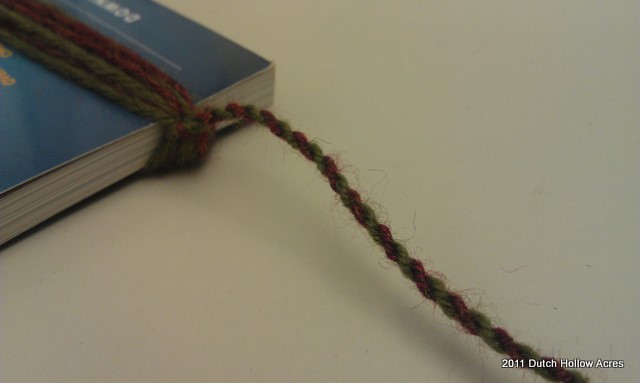
Step 3:  Place the slip knot over a book or magazine and wrap an additional 5 time ending on the end where the slip knot is


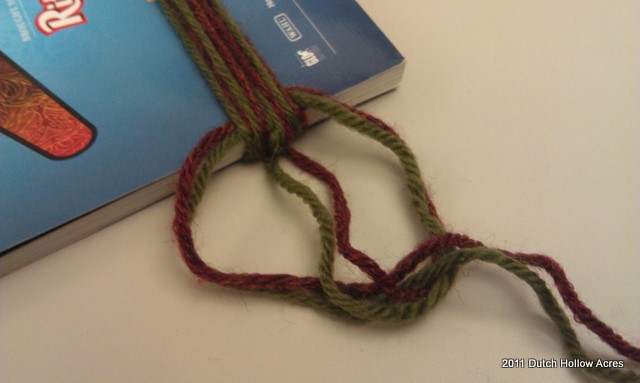
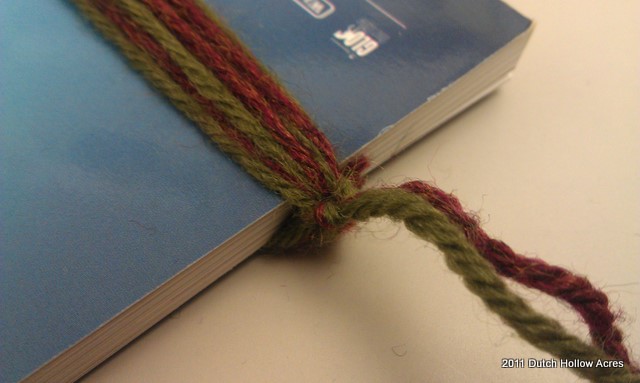
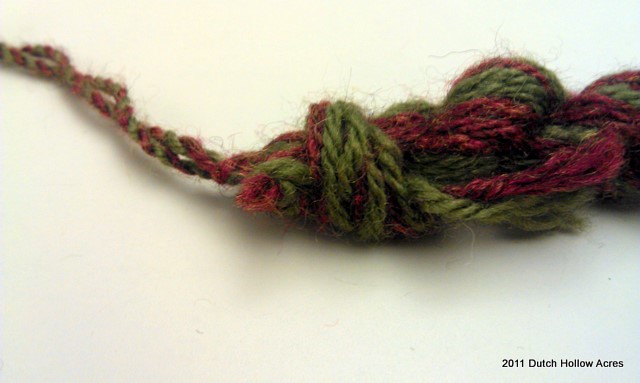
Step 4:  Cut a long 8-10 inch tail of yarn and tie a knot securing all loops of yarn

Step 5: Twisting the tail into a cord.  Following the twist of the yarn continue twisting each strand between your fingers separately and then counter twist them together to create a cord


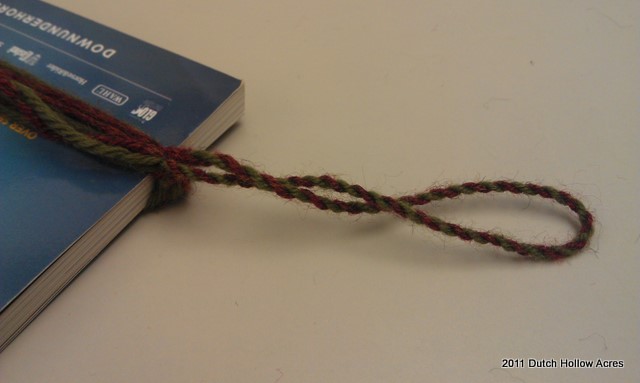
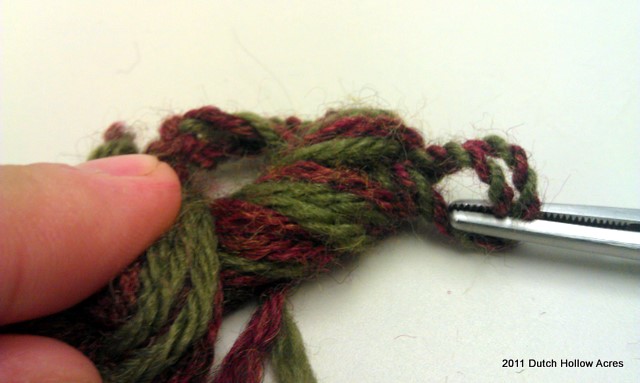
Step 6: Create a loop with the cord tying the loos end around all strands of yarn and secure with a few knots.


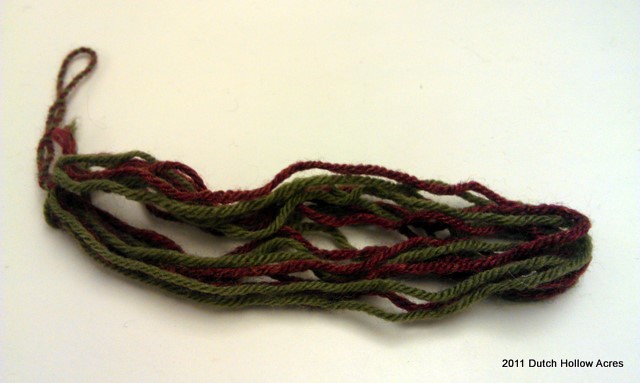
Step 7: Remove yarn from your magazine.


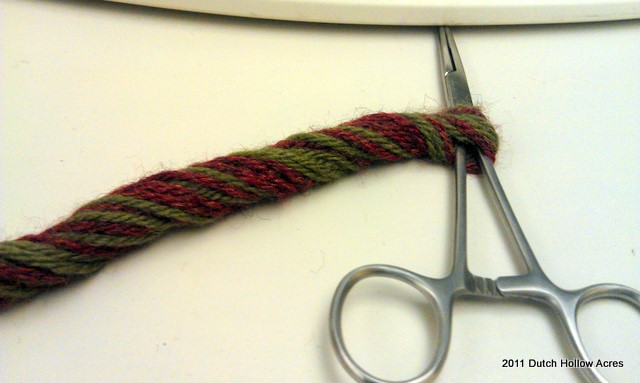
Step 8: Using hemostats on non tail end twist the yarn like you normally would to create a skein.

Step 9:  Grab the cord with the hemostat and pull through to create your skein.


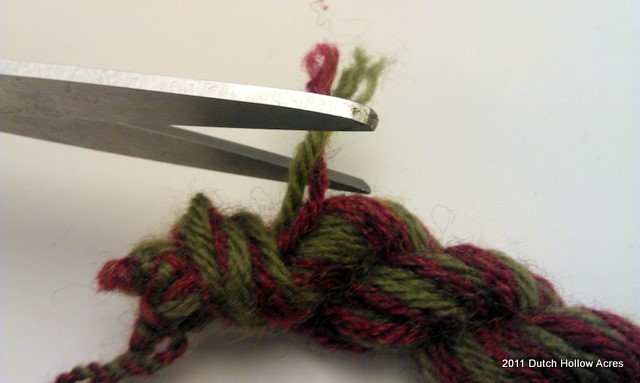
Step 10: Snip off any loose strands.

Step 11: You’re done!


===================================

One last thing!  A friend of mine is having a drawing for anyone who “likes”  her farm  Seven Spirits Farm on Facebook.  Check her out!  The drawing will be picked today so get there quick!

The drawing will be for a 4-5oz. art batt (your choice of batt), and for the people that dont spin or felt i will spin it up for them into yarn :O) I will also be throwing in a lil surprise…..Just share the drawing with others and post here that you shared and you will be randomly picked! Friday night i will post who won.

===================================

WIP: Skein Challenge and Baby Blankets

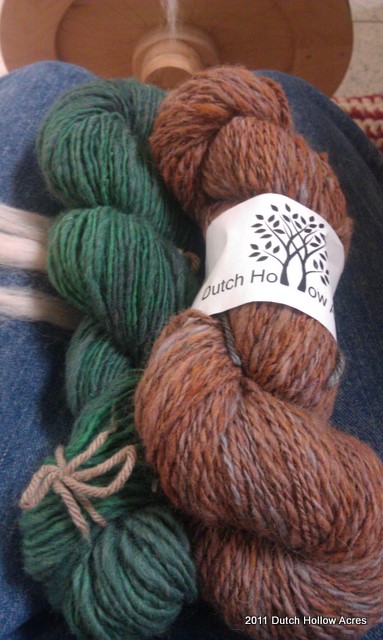
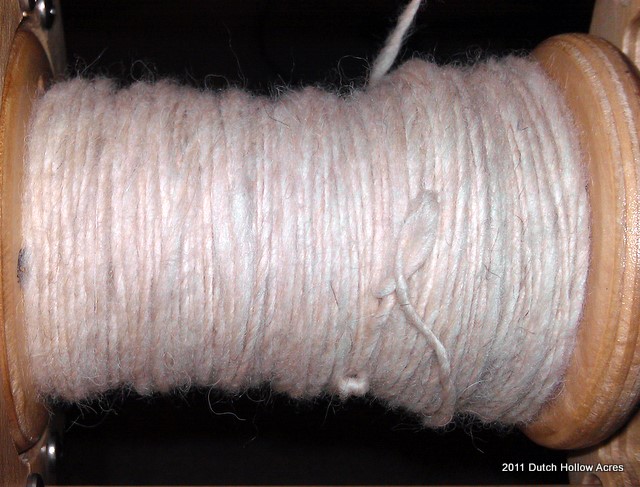
Well I’ve almost finished with my 8 skeins by this Friday challenge.  I just have to fill up the rest of this bobbin and do one more to complete my task!  Phew!

The reason for the mad rush to spin up so much yarn is because I have a vendor show at the Victor Arts & Crafts festival on Saturday.  I wanted to add some freshly spun up alpaca dyed in fall colors since the trees are at peak right now in WNY.

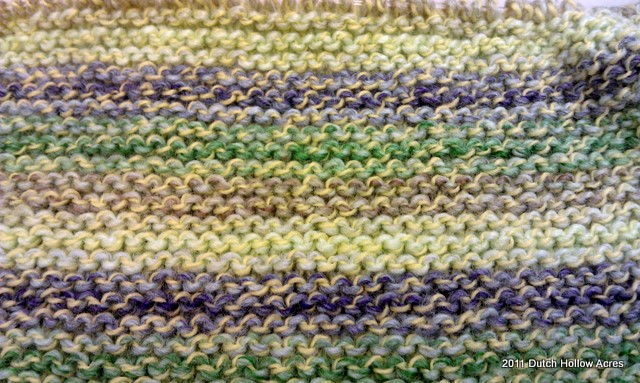
My second project is a baby blanket for my boss.  They are expecting in December.  Since they chose not to know what sex the baby will be I’m working up this lime green and purple stripe blanket.  With all the spinning I haven’t made much progress but so far it’s 80 stitches wide and 42 rows long.