12 Alpaca Days of Christmas

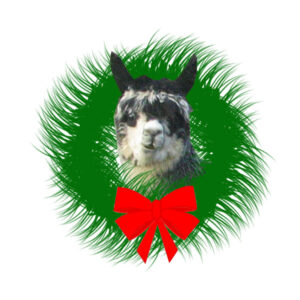
Alpaca_Wreath
On the first day of Christmas
My true love sent to me:
A Long Haired Champion Suri

On the 2nd Day of Christmas
My true love sent to me:
2 Heated Buckets
And a Long Haired Champion Suri

On the 3rd Day of Christmas
My true love sent to me:
3 LGD’s
2 Heated Buckets
And a Long Haired Champion Suri

On the 4th Day of Christmas
My true love sent to me:
4 Tui Grazing
3 LGD’s
2 Heated Buckets
And a Long Haired Champion Suri

On the 5th Day of Christmas
My true love sent to me:
5 Bales of Hay
4 Tui Grazing
3 LGD’s
2 Heated Buckets
And a Long Haired Champion Suri

On the 6th Day of Christmas
My true love sent to me:
6 Macho’s Fighting
5 Bales of Hay
4 Tui Grazing
3 LGD’s
2 Heated Buckets
And a Long Haired Champion Suri

On the 7th Day of Christmas
My true love sent to me:
7 Fans a Blowing
6 Macho’s Fighting
5 Bales of Hay
4 Tui Grazing
3 LGD’s
2 Heated Buckets
And a Long Haired Champion Suri

On the 8th Day of Christmas
My true love sent to me:
8 Cria Pronking
7 Fans a Blowing
6 Macho’s Fighting
5 Bales of Hay
4 Tui Grazing
3 LGD’s
2 Heated Buckets
And a Long Haired Champion Suri

On the 9th Day of Christmas
My true love sent to me:
9 Dam’s a Cushing
8 Cria Pronking
7 Fans a Blowing
6 Macho’s Fighting
5 Bales of Hay
4 Tui Grazing
3 LGD’s
2 Heated Buckets
And a Long Haired Champion Suri

On the 10th Day of Christmas
My true love sent to me:
10 Spinners Spinning
9 Dam’s a Cushing
8 Cria Pronking
7 Fans a Blowing
6 Macho’s Fighting
5 Bales of Hay
4 Tui Grazing
3 LGD’s
2 Heated Buckets
And a Long Haired Champion Suri

On the 11th Day of Christmas
My true love sent to me:
11 Drive By Breedings
10 Spinners Spinning
9 Dam’s a Cushing
8 Cria Pronking
7 Fans a Blowing
6 Macho’s Fighting
5 Bales of Hay
4 Tui Grazing
3 LGD’s
2 Heated Buckets
And a Long Haired Champion Suri

On the 12th Day of Christmas
My true love sent to me:
12 Volunteers
11 Drive By Breedings
10 Spinners Spinning
9 Dam’s a Cushing
8 Cria Pronking
7 Fans a Blowing
6 Macho’s Fighting
5 Bales of Hay
4 Tui Grazing
3 LGD’s
2 Heated Buckets
And a Long Haired Champion Suri


Thank A Farmer This Turkey Day

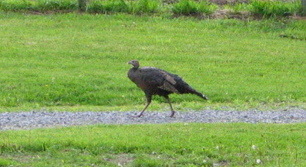
turkey

It’s that time of year where we get together with family and enjoy meals that are bigger than any digestive system can handle.   But where does all that food come from?  From farmers of course.  So this Thanksgiving, say thank you to a farmer.

We are blessed here in New York State to have such a wide variety of farms which can supply every item on your dinner plate this season.  From free range turkeys, cranberries, potatoes, wheat for breads,  corn, pumpkins, and don’t forget the best apples on the planet! 

Don’t forget about our hard working dairy farmer too.  Even though it’s Thanksgiving the cows don’t know it’s a holiday and still need to be fed, cleaned up after and milked.  Dairy farmers have had a pretty rough patch lately with milk prices being so low that the cost to produce a gallon of milk is more than what it’s selling for.  

Take time out this holiday season and thank your local farmers.  To find local farms near you visit http://www.localharvest.org or help NY farm legislation by becoming a member of the NY Farm Bureau

If you are on twitter be sure to use the tag #ThankAFarmer today Wednesday 11/25/09 and spread the word. 

Winter Visitors

Welcome Jasper and General Lee who will be spending the winter here at Dutch Hollow.  They are working horses for Adirondack Saddle Tours and are spending the winter with us to fatten up and get some needed R&R before they head up back north for the next tourist season. 

Glad to have you boys!  Hope you enjoy your stay.

The Art of Mucking (Part 1)

If you’re new to caring for livestock you soon realize that you need a small arsenal of shovels, rakes and forks to pick through all the different medium your fuzzy friends poop in or on.   It seems rather odd for me to be writing a post about poop detail but the truth is it’s an art.  Yes I said art.  A seasoned ranch hand can wield a fork with the grace of swordsmen.   Professionals can toss just one horse apple from a fork at a time across a 12’ stall into a muck bucket or the whole pitch without missing their mark.  Yes, I call mucking an art.

I still haven’t found the perfect alpaca fork yet but here is what I have in my barn and their use.


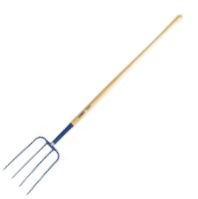
pitchfork
Pitch Fork:
Pitch forks are a time tested piece of equipment and every farm should have one.  They have wood handles and strong metal tines.  I personally like 4 or 5 tines to my forks so less stuff falls through them.  Pitch forks are used for heavy wet hay/straw that needs to be removed.  These are great for anyone who uses straw for bedding.  Personally I can’t stand straw bedding and the work it takes to keep a straw stall so my pitch forks are used to remove hay waste or when I need to pick into mud. Plastic and shoves do not do mud well.


stallfork
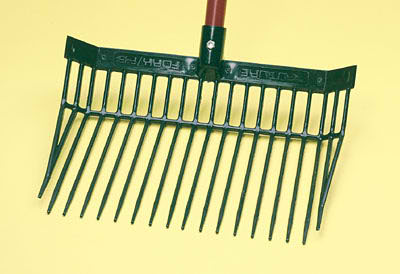
Classic Stall Fork:
Typical stall forks are usually wood handled with molded plastic ends with 17-18 tines and come in many colors.  These are my most favorite forks and my first choice for most applications.  The fork is light weight, sturdy, holds on to waste easily while allowing you to sift out the bedding or dirt from the fork.  This fork is the best for horses in sawdust or pine shaving bedding.  Alpaca beans are too small and fall right through the fork unfortunately.  I do use the fork to pick up pee areas for the alpacas since the sawdust clumps together nicely.  This stall fork is also great to use as a rake when adding new bedding to a stall.  Using a traditional rake is slow because it’s not strong enough to handle moving high volume sawdust.

finetines2
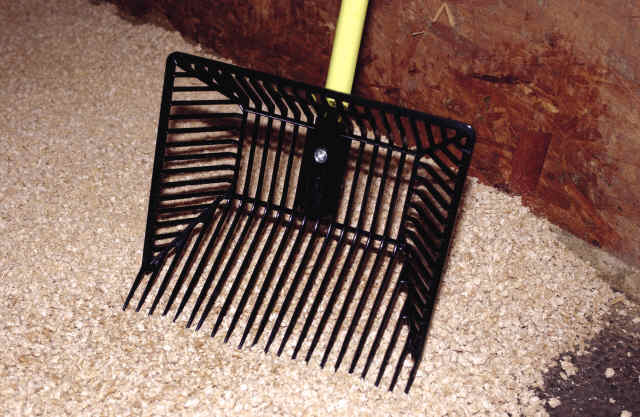
Fine-Tines Stall Fork:
Much like the traditional stall fork the Fine-Tines fork advertises 30 tines instead of 17-18 allowing smaller waste to be kept into the fork while still sifting the clean bedding out.  It’s an expensive fork $30! I contacted the company and inquired about its use on alpaca beans.  They said they had alpaca owners buy them but have never received feedback on their effectiveness.  Well here’s my review…. Don’t buy this fork!   Sorry Fine-Tines folks but the fork is very heavy, I hate the big basket on the end, it only traps 30% of the alpaca beans in the fork and its weird shape and bulkiness doesn’t allow it to bulldoze through bedding as easily as the traditional stall fork.  I was very disappointed in my purchase
L

shovel
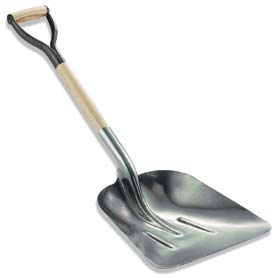
Shovel/Scoop:
Wide, flat bottom, coal shovel is my choice.  I use the shovel just as much as my stall fork.  It’s the only thing I’ve found to scoop up alpaca beans and great for stripping down stalls.  There are a ton of things the trusty shovel can do and it’s one thing that my hubby used to run off with but now he has his own.

 rake
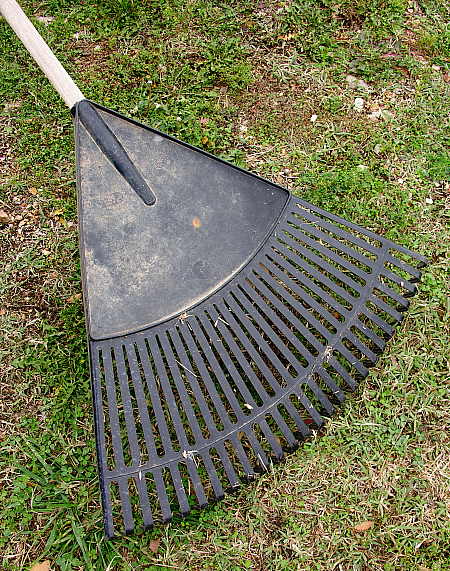
Yard Rake:
Your everyday yard rake be it plastic or metal, your choice. I prefer plastic; tines tend to keep their shape longer.  Alpaca beans are easily raked up into scoop-able piles, tidies loose hay/straw into piles and makes a great butt scratcher for your horse.  Yes, a butt scratcher; my horses just love to get a good butt itch in with the rake. 

I still haven’t found a fork that works to sift out alpaca beans from sawdust.  I’ll keep you updated once I find or make a fork for this application.

To make your chores quicker and easier on you and your bedding budget I highly recommend a 4-6” base of sand or stone dust covered by rubber stall mats.  Interlocking mats are best but if your base is thick enough, standard 4×6 mats from tractor supply work great too.  If you don’t get your base thick enough and it heaves with the freeze/thaw cycle then non interlocking mats can buckle.    Your trusty shovel easily will glide over mats without catching on anything or digging up your valuable base material. 

Happy Mucking!

How To Own Alpacas Without A Farm


Most of us have seen the Mike Rowe Dirty Jobs video of alpaca ranching.  There’s shearing, poop clean up, spitting, breeding, birthing, teeth filing, injections, toenail clipping and general farm care.   To say the least investing in alpacas is a messy business …. Or is it?

Did you know you can invest in alpacas without ever having to wear muck boots or pick up a shovel?  Or put off that large initial investment in a farm while realizing your dream of alpaca ownership?  Agisting or Boarding Alpacas at Dutch Hollow Acres allows you realize most of the benefits of alpaca ownership without the cost of establishing a farm or consuming your time to run it.  There are 2 types of agisting investors; Active and Passive.

Active:
These investors want to be part of their alpacas life and their care.  Most of these folks plan on having a farm in the future but do not currently own one or live close enough to the agisting farm where they can be part of the alpaca lifestyle.   Active investors take part in important decisions of their investment from showing, breeding, marketing, selling under their own business/farm name.   Active agisting allows the investor to be seen as an active breeder by the IRS and entitles them to all related tax deductions.  These deductions (including the purchase of initial livestock) can be healthy sized offsets to other forms of income.

Passive:
The passive investor is the type of person who sees alpacas solely as an investment animal and do not plan on taking part in any of the day to day care or decisions.   The aigsting farm makes all or most of the investment decisions such as breeding and marking of the animals.  The IRS allows this type of investor to only take deductions against any income earned from your alpaca investment.

What do boarding fees cover?
Dutch Hollow Acres board covers all of the general care and maintenance of the alpaca which includes: Grain, hay, water, de-worming, and toenail clipping.  Additional services such as sheering, teeth filing, breeding, birthing, marketing, brokering, etc are covered by the owner.

2009 Tax Deductions:
The IRS still has a great option under section 179 to deduct up to $133,000 of your initial alpaca purchase on your 2009 return.   Assuming a $25,000 initial investment, return on investment could be…. $3,750 for 15% tax bracket,  $6,250 for 25% tax bracket,  $8,250 for 33% tax bracket, or $11,250 for 45% tax bracket.   If you make your alpaca purchase late 2009 and file your tax return early 2010 you could see a sizeable tax return right away!  The IRS will let you fully deduct the purchase price of your alpacas even if you only put 25% down and are financing the rest.

Active investors can take even more deductions such as mileage in their return.  See your tax accountant for details.  It’s advisable to get an accountant who has experience with alpacas.

Initial investment:
Most alpaca investors plan on running their own farm some day and have been holding off on the idea of investing in alpacas until they can care for them.  In actuality it’s cheaper to agist your initial investment and take advantage of Section 179 tax deductions now than waiting another 5 years.  The typical alpaca investment includes 2 females.  1 Bred female and 1 juvenile female to keep investment costs more tangible.   Assuming a 50/50 male to female ratio and 80% live birth your initial 2 female purchase can grow to a herd of 12 in 5 years (7girls, 5 boys).   Assuming you don’t sell anyone off the herd could grow to 50 in 10 years!

General 1st Year Cost Analysis:


Farm Ownership

Agisting

2 Females

$25,000

$25,000

Farm Startup, Barns, fences, etc

$100,000

0

Equipment – tractors, implements, etc.

$30,000

0

Hay, Grain, Water

$300

0

Vet & Misc.

$1,200

$1,200

Insurance (theft, accidental death, major health)

$813

$813

Board

0

$1,825

Total

$157,313

$28,838


By boarding your initial herd, you can save the money you would have invested in farm start up costs and reinvest in more females or higher quality studs and grow your herd faster.  After 5 years the sale of your alpacas can be used to purchase your new farm!  The purchase of that farm can also be used to offset the income made on the sale of those same alpacas.

Guaranteed Return on Investment:
There are many variables that come into play with alpaca ownership that can affect profitability and as with any investment there is no guarantee on return.  Often the amount of effort you put into your investment is related to the amount of profit realized from it.  As a general rule bred female offspring will sell for as much as you paid for the dam.   Our other income sources come from the sale of fiber quality/pet males, stud fees, boarding, marketing/brokering fees, and sale of raw fiber or finished alpaca products in our farm store.

The majority of alpaca investors raise and breed alpaca’s full time within 3-5 years.  Currently my husband and I choose to still hold our “day jobs” as well as manage our farm.  We find that the care of alpacas is much less than other types of livestock and allows us to comfortably do both.

To learn more feel free to ask us any questions or schedule a farm visit.
Dutch Hollow Acres
Lindsay@lklik.com

585-991-6706