It’s happened to the best of us. You’ve got a load of hay on and a gust of wind or a poorly negotiated corner and POOF! a bale rolls off your load. Do you notice? Nope, you’re too focused on driving home as fast as you possibly can because the skies are about to open up and drench you and your beloved hay score off of Craigslist. You know the kind, must pickup today $1 a bale things.
Pulling into your barn, negotiating the aisle like an FEI 4 in hand driver on a mission, you’ve beaten the rain! For the heck of it you actually decide to count the bales as you toss them into the barn. 17, 18, 19…. Where’s 20? Damn it I gave the guy a $20, did I miscount loading? Nope, one of the bales decided that becoming fodder was beneath its purpose in life and cast itself into the unknown.
Do you go back for it?
Depends. $1 probably not, $7 to $10 2nd cut compressed bale. Oh heck yeah you will. Retracing your exact steps in hopes of finding the $60lbs of forage that costs more than your morning DD.
But beware! Once your bale has become a roadside hitchhiker it’s going to do just that. Enter the opportunist in the micro mini compact car or other small farm vultures. I myself have scarfed up a cast bale or two in my day.
Last week while driving north on the highway I spotted a rouge bale in the southbound shoulder. Perfect, no one is going to get that one, MINE, I thought as I continued up to “the city” for supplies. Wrong! As I crested the hill preparing to put my blinker on to make my way for the deliciously green bale I had seen earlier I was shocked to see the micro mini had beat me to it! She had already gotten to the side of the road and was cramming the soft, leafy, tightly bound goodness into the back seat of her coup. A bounty she obviously was willing to sacrifice the car for. Smells of fresh cut greens swirling in her nostrils the whole ride home.
Touché my tiny donut wheeled friend! Until next bale.
How has your mini been doing? Have they figured out “walk-on” and “whoa?” Have you taken them places and asked them to do some obstacles? Great you’re ready for part 3! Let’s start driving!
Well, maybe not driving but long line driving. The next step is to get behind your mini and have them do everything you asked of them while you were walking them by their side.
Tools needed:
Mini Halter
2 lead ropes
Dressage whip
I bet you have all of that in your barn already! See you don’t need to buy a harness or cart yet for this step!
Clip the lead ropes onto the halter one on each side and get behind your little fluff butt and ask them to walk on. Keep your reins low, below their bum so if they try to turn and face you you can easily redirect them the correct direction. If they just aren’t getting it, you can use a friend to help lead them on to start. I find they usually figure things out pretty quick.
Practice your “walk-on” and whoa. If they trot, make sure you asked for it. If you didn’t, have them slow back down to a walk. To slow a gait you can say Easy, or sloooooow, or purr at them. Remember don’t say Whoa unless you mean stop and stand.
Once they are able to do straight lines go and whoa, start adding in some turns and go out on adventures. This time if you walk down the road with your mini your neighbors won’t laugh at you and say things like “that’s a big dog” or “I thought you’re supposed to be driving that horse not walking it like a dog!”
If you’re just doing 10 or 15 min sessions this step should take you about 1-2 weeks. Make sure when you ask them to Whoa that they stop and stand without moving or turning around. They must do this without complaint before you can proceed to the next step.
With the weather warming up it’s time to start thinking about ticks. Every ear the tick problem seems to be getting worse and worse in NYS and with that comes complications from Lyme disease.
I’ve had to treat lyme in several of my horses as well as myself so I take a very proactive approach to preventing ticks from causing an issue on my farm.
#1 Barn Cats
Yes we all have them and love them and people just drop them off. Even though cats don’t seem to have too much of an issue with Ticks they do transport them into your barn. I know of a local barn who hand a show horse with lyme. This horse was in full work and lived in a stall so it’s not like the horse got a tick from a trail ride. The carrier? the barn cat. So protect those cats! There are many different methods but I prefer the Seresto collars. They last up to 8 months and I don’t have to try and get a feisty cat to take a pill.
#2 Keep them off your Horse
Next step is to make sure they don’t crawl up you horses legs and venture into areas they shouldn’t. My vet recommended UltraBoss a few years ago and it just plain works! Some horses may react to a pour-on so test a small area first to be sure they don’t have an allergic reaction. It’s 3oz/100lbs body weight. I pour a strip onto their mane, another on their tail and then work the rest into their legs all the way up. WEAR GLOVES! You’re using a LOT of this product and if you’re doing multiple horses you’re going to be handling it way too much so use protection.
DO NOT PUT THIS ON CATS! It will kill your cat. So if you use this be sure to wash your hands before petting that pestering kitty at your legs.
#3 Prevention at the source
Believe it or not the lyme problem starts with mice. Cats do a good job but they can’t keep up with mice so here’s how to give these little guys a helping hand. Soak cotton balls in UltraBoss, let them dry out fully then place them in areas mice are likely to nest. The treated nesting material will help keep the ticks off the mice! Brilliant! If you don’t feel like making them yourself you can buy pre-made “tick tubes” to place around your property.
I know a lot of people think fighting with chemicals is bad and they were hoping for a holistic approach. Let me tell you that none of that stuff works. Diatomaceous Earth (DE), Garlic, Lemon and whatever stuff you find on the internets won’t work. It can help and be part of your war against nasties but don’t rely on it. Lyme is a terrible illness. its symptoms can be anything from blindness, colic, lameness or just a’int right. Treatment isn’t cheap and can ultimately be the death of your poor pony.
I hope you are enjoying the blogs and vlogs. If you do be sure to subscribe and share! It helps keep this information free!
Facebook as a fun way of letting you see your memories of years past. Sometimes that’s fun and sometimes it bring up things you’d rather forget. Case in point, a 40 year old Paso Fino who got frostbite! Since this is not something that happens frequently in horses I thought I’d share our experience with this odd event.
Year: Feb 2015 Horse: Habanero Age: 40yrs old Breed: Paso Fino Sex: Gelding Temp: -36F with the wind
Like most folks who care for livestock I live and breathe weather reports. That night was no exception. I was very well aware how cold it was going to get and prepared the barn with extra deep bedding, brought in mares and foals and made sure very one had access to a wind free shelter, heated water and as much hay as they could possibly want to eat.
8pm I did night check before turning in for the evening. I remember having to walk the old man back into the shelter since he loved being outside. I left when he was happily munching on a hay net. The next morning I came out to find he had severe frost bite on his left ear.
Photo of ear I sent to my vet.
My poor vet asked me a bazillion questions. The best answer I had was yes, I feel heat in the ear tip. Which was a good thing since that meant we still had blood flow! Irony, despite the -30F temps a swelled up ear meant we had to bring the inflammation down with a cold pack! Thanks to barn cameras you get a view of this process. Pony layered up in 4 blankets because he was hypothermic and me holding an icepack to his ear.
Applying a cold compress to a swelled up frostbit ear in -30F temps
Once the swelling was under control the next step was to prevent the frostbite from getting worse. How do you do that? Petroleum jelly of course and lots of it. What a sweet boy he was putting up with all this attention on an ear that I’m sure hurt a lot.
A well lubricated Habanero. “Seal in the heat”Warming up and wanting to eat.
As the days went by we kept the area clean and re-applied Petroleum Jelly as needed. After a few days the skin around the base of his ear sluffed off and pink regenerative tissue appeared. The ear itself was still very swelled and he was unable to move it at all.
2 days later. Ear still not moving and swelled.Skin sluffed off at base of ear.
This was our life for another 2 weeks. Daily care of the ear and keeping the boy inside and out of the elements while it had time to heal. After 2 weeks this is what his ear looked like.
Frost bit Ear 2 weeks later.
Things ALWAYS look worse before they get better. A sight like this kind of freaked me out but it was a good thing. Tissue was pink, blood is good. At this point no more Petroleum was being used but antibiotic cream was being applied. Winter fuzzies and the fact this boy had a TON of hair was getting annoying. With the cold temps we didn’t have the option to wash so the choice was made to cut off his locks so we could keep his wound clean. What a goofy looking lad he became. He still couldn’t move his ear at all but it was looking better!
You’ll have to excuse me for the lack of healing photos. The month of March that year brought me 3 beautiful foals so while I was tending to this old boy we had a lot of other stuff going on!
What I can tell you is that by April this is what he looked like! The swelling came down and his ear started to move again. By April he had 80% function of his bad ear. By May he had full range of motion.
2 Months and 80% range of motion
What caused this horse to get frostbite? With the help of barn cameras I was able to answer that question. Despite my best efforts that night, this old man ended up sticking his head outside of the run-in shed for the entire night! Why? I have no idea but he seemed to think it was a good idea. Horses, we’ll never know what goes through their heads. They’ll always find a way to challenge us and we love them for it.
Horses come and go on any farm and mine is no different. I acquired a 36″ mini a few years ago and what the heck do you do with a mini? Get it another mini as a friend of course, then lose the original mini due to Lyme disease and now your friend mini is alone so you obviously need another mini to keep that one company, oh heck lets make it 2. So you started out wanting no minis but through mini-math you end up with 3. Got it?
Ok, you now have 3 mini horses who do nothing but look cute and poop an amazing amount for such little animals. Time to put one to work! My day job switched my schedule around slightly, leaving this morning person with a few extra minutes a day to spare. Lets make those extra few minutes productive ones!
When I talk to people, they love to give me excuses. LOTS of excuses as to why they can’t or won’t train their horses and these are the main ones I hear all the most.
I have no time. Pft, sure you do. Follow along on this series and I’ll keep you updated with training my mini in just 10-20 min 3-5 days a week.
I can’t start, I don’t have a harness. It’s ok, we don’t plan on hitching to anything in a while. Heck, your horse might not even be a candidate to drive so don’t go off wasting $ on stuff you might not ever use. Teaching a horse to drive starts with line driving. You don’t need a harness for that, heck you don’t even need a bridle. Reins clipped onto a halter is what I start my guys in. You don’t need fancy reins either, if you’re really going to cry poor braid up some bailing twine and tie it on to the halter or be real fancy like and use snaps.

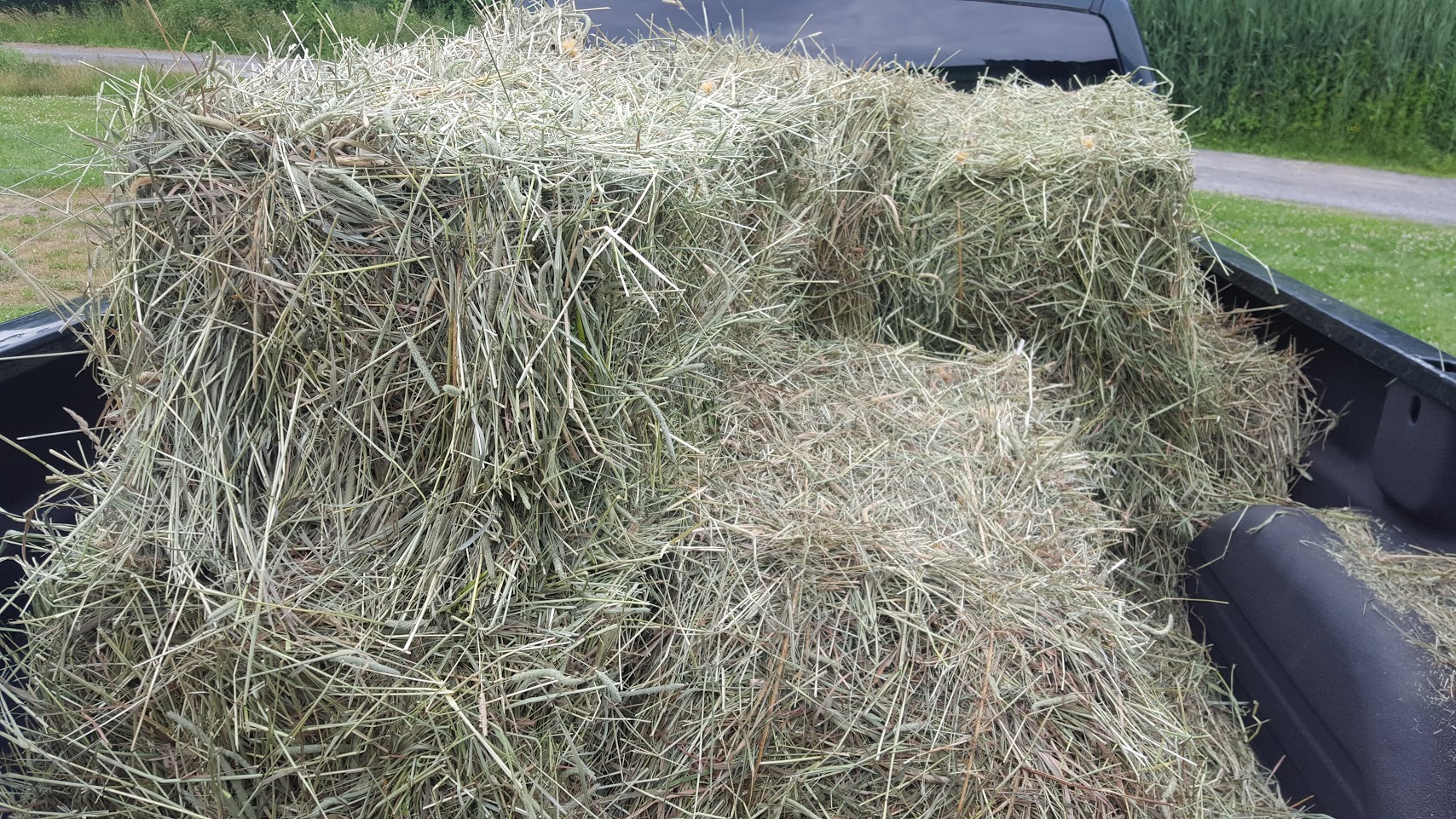 It’s happened to the best of us. You’ve got a load of hay on and a gust of wind or a poorly negotiated corner and POOF! a bale rolls off your load. Do you notice? Nope, you’re too focused on driving home as fast as you possibly can because the skies are about to open up and drench you and your beloved hay score off of Craigslist. You know the kind, must pickup today $1 a bale things.


