How To Make A Rag Rug (Toothbrush Rug)

Welcome Fiber Arts Friday Fans with WonderyWhyGal
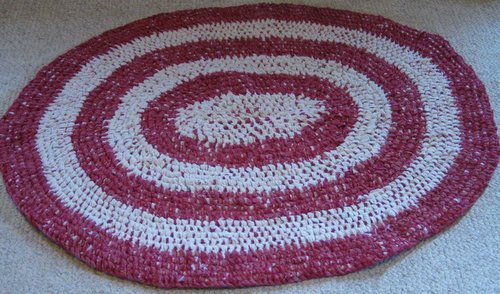
Rag rugs are a blast to make and do not require any fancy techniques like crocheting.  The rugs are fairly quick to make and you can see the results of your efforts take shape in just a few rows.  This technique is not limited to rugs, you can also make other items like a rag placemat, dog bed, cat bed, bedspread, basket, or anything else you can think of.  These rugs can be great kids projects too since it involves fun things like ripping of fabric.

Making a Rug Tool:
Rag rugs are often called Toothbrush rugs because of the type of tool used to make them.  Folks used to cut the head off an old toothbrush and file it down to a point while using the pre-drilled hole (for hanging your tooth brush) as a place to attach the fabric to.  Today, there are fancy prefabricated tools you can use or you can still make your own.  Technically a rug tool is just a really big needle.

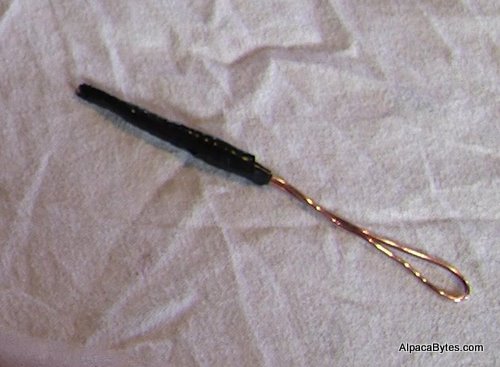
I’m cheap so I chose to make my rug tool out of scraps I found in the basement.  My needle is made out of scrap copper wire and electrical tape.  It might not be pretty but who cares, it’s free.
Making Fabric Strips:
For my rug project I decided to repurpose some old flannel sheets.  I cut a little slits along one edge of the sheet every ½ inch or so.  Now comes the fun part!  Grab that little fabric tag and rip!  The flannel sheets tore very evenly right down to the end without the need to cut each strip out by hand.  If you have a cat hanging around this process is very fascinating and you might have to fight for some of your strips back.

How To Connect Fabric Strips:
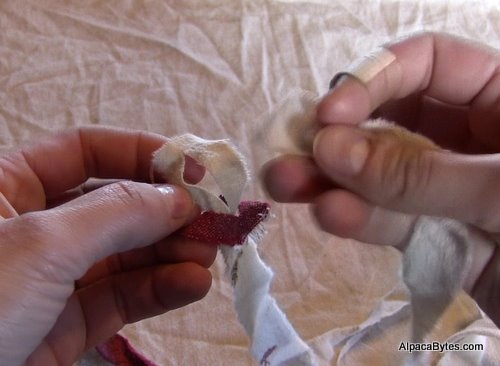
Now that you have all of these strips hanging around you need to be able to put them together.  Many suggestions have you sewing the strips together, which is great, if you have that kind of time to waste.  Easiest method I found is to cut a small slit in the ends of each strip and slipknot them together.  Thread one strip through the slit you made in the other and then feed the tail of the 1st strip through the slit you made in the end.  Pull tight and voila you have connected the 2 strips together.
 

Starting Your 1st Row:
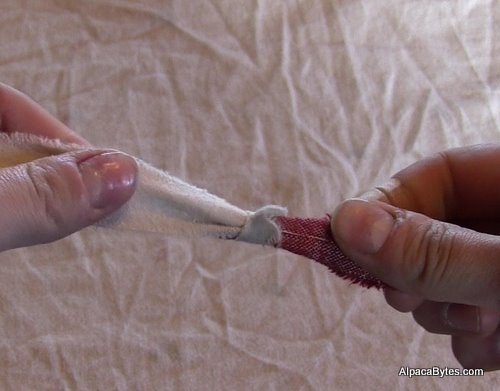
These directions are for a rectangular rug.  I will cover oval rugs and circle rugs on another post. Start your rug at the connecting slipknot where your 2 fabric strips meet.  1 of these strips will be the “core” the other will be used to tie the knots.  I’m right handed so find it easier to hold my strips in my left hand and use my rug tool in my right.  In the photos the light colored fabric is the “core” and the red is what I’ll be tying knots with.

–       First cross the red over the white so it looks like the number “4”
–       Feed the tail of the red behind the white and through the loop hole  in the “4”
–       Pull the red all the way through and make your first knot. Keep this first row  fairly taught but not so tight that you won’t be able to get your tool through again later
–       Make sure your “core” fabric stays straight and doesn’t get curled up into your knots
–       Continue knotting until you achieve the width of the rug that you want
–       Row 1 can be a bit of a pain.  You may find it easier to use a safety pin to secure it to something.  I usually like to stand up and place the first knot on a hook and knot my first row from there.

Starting Row 2 – ?
Again, these directions are for a rectangular rug.  This is the easier of the rug patterns to make and does not require any extra stitches per row. The length of your first row is the width of your rug.  How many rows you add on from this point determines the length of your rug.

–       When you’re ready to start your next row, fold your “core” fabric over so it is now playing alongside your row of knots.
–       With your rug tool stab the center of the last knot you had just made
–       Make sure you still go behind the “core” fabric before you come through the loop

Changing colors:

Solid color rugs are no fun of course you want to change colors.  When you get to a point you want a new color just cut the fabric off, cut a new slit in the end that is part of your rug and tie in your new color.

 Video of all the steps described above!  In HD!
Alpaca Lifestyle

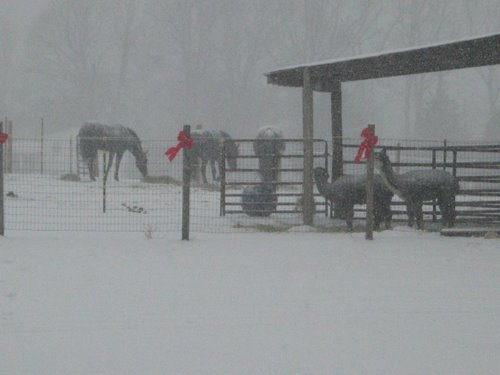
I decided to keep track of everything I did this morning before 9am.  Yes, this is typical day.  In the summer months all the shoveling/plowing is substituted with fence repairs, mowing, weed whacking etc.  Then there are the fun days when you have a sick, cold, bottle fed alpaca, or vet, dentist, farrier visits. 

  • Let out dogs to potty
  • Feed dogs and indoor cats
  • Shoveled walk ways and around the car and barn
  • Barn chores
    • Feed 10 alpacas 5 horses grain
    • Muck stalls
    • Fill water buckets
    • Give everyone hay
    • Prep stalls for night chores
  • Plowed driveway
  • Tended to the coal stove (we heat our house with coal)
  • Checked email for any new Farm Store Purchases
  • Packed sold items
  • Decided to check inventory of all Farm Store Items
  • Let dogs out again and played with them so they got some exercise
  • Showered got ready for the “day job”
  • Went to Post Office to mail out sold items
  • Thank you Tim Horton’s I had forgotten to eat breakfast again!

Phew! All I can say is thank goodness I don’t have human kids!

Chocolate Cream Pie

The weather is awful today with negative temperatures, snow and wind that will chill your spine.  Being a bit of a gluten when left to my own accord trapped inside a house I can’t help but think of food and what I delicious delight I can mix up.  Today’s diet buster: Ghiradelli Chocolate Cream Pie.

I followed this recipe with one major exception.  I LOVE dark chocolate and chose to use Ghiradelli’s 100% cocoa bar.  I must say I am a fan of the biting flavor of dark chocolate.  I love it so much that I will even eat a square of the 100% cocoa.  It only seemed fitting to use such wonderful chocolate in this Sunday pie treat.

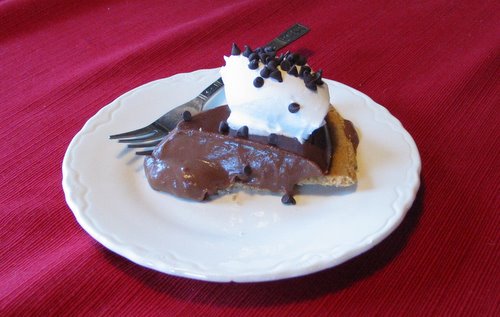
I present to you my Sunday pie. Topped with Avon, NY’s own CoolWhip and Mini semi-sweet chips.

Preparing Shots for Alpacas

alpacashots

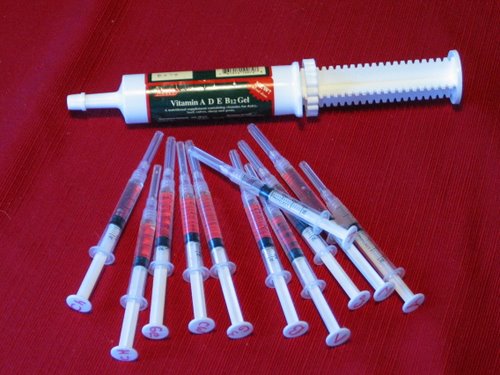
Today is the day of the month I feel like a junkie.  Since I live in a region that has the meningeal worm my alpaca chores the first weekend of each month involves giving our alpacas a shot of Ivormec.   My little cria Albina also got a booster of CD&T and some Vitamin A&D Paste today also.

I utilize my morning feeding routine to lock the alpacas in their run-ins.  Surprisingly they know something is up even though it’s the same routine.  Smart animals!  While they are in munching away I head back inside to prepare all the syringes. 

Ivormec is given at 1cc per 70lbs of body weight.  It’s a good idea to know your alpaca’s weight so having a livestock scale is recommended.  I don’t weigh and give shots on the same day.  It seems to stress them out so usually I weigh them 1 or 2 weeks before hand to spread out the scary moments.  I’ll often psych them out and sometimes lock them in just to give them treats and let them back out to keep them guessing but they always seem to know when I have other intentions.

I use a 20 gage, 3cc, 1 inch long needles for ivormec  – I find the 22 gage is too small and it’s hard to draw.

NOTE: Mark the bottom of the plunger with the initials of the animal it’s going to

Preparing the Syringe:

·         First wipe the top of the bottle off with alcohol to sterilize it.

·         Draw back on the plunger

·         Uncap the needle

·         Insert the needle into the bottle and Depress the plunger adding air to the bottle

o   Adding air makes it easier to draw

·         Tip the bottle upside down and slowly draw back on the plunger

o   If you draw back too fast you’ll get a lot of bubbles

·         When you have the desired amount remove the needle and recap it

Giving your alpaca shot via SQ (Subcutaneous):

·         SQ means you will be injecting into the area between the skin and the muscle

·         Use either a helper to hold your alpacas or confine a bunch of them in a small area so you can barely can move between them. 

·         When ready to give your shot check for air bubbles. 

o   Tip the syringe so the needle is pointing up and tap the side

o   Uncap the needle

o   Slowly depress the plunger until all air is out and you have a small bead of solution bead up or drip

·         I find it easiest to lean over the top of my target alpaca with me standing on their left side and reaching over the top to their right

·         Use your left hand to grab their chest fiber behind their right elbow making a tent in their skin

·         With your right hand insert the needle into the tent of skin.  Ideally you’ll want to draw back to see if you hit a vein but the chances are slim and their fiber makes it difficult to see.

·         Depress the plunger

·         Rub the area – if your hand is wet you probably injected their fiber and totally missed the alpaca all together.  The thicker their fiber gets the harder it is to give them shots!

Disposing of your needles:

·         Get a puncture proof can or jar.  I like coffee cans myself

·         Label the jar “Bio Hazard – SHARPS”

·         Untwist the needs to remove them from the syringe and put them in your jar

·         When your jar is full.  Duct tape it up, make sure all labels are still visible and throw it away.