Mmmm, tastes like founder!

Question:  When you think of native or wild horses what climate are they living in?  Are they in lush green forage of Kentucky? Or in arid climates like out west?

Horses are arid animals, their digestive system is meant to forage all day on small bites and to keep moving in search of food and water.   However 1,000’s of years of a human/horse relationship has taken these animals from their native habitats and tossed them into what works best for us humans and where we like to live and to submit to behaviors we deem appropriate.

So, the happy desert horse went from walking 20 miles a day on hard ground barefoot with a diet of forage that it found along the way to being cooped up in stalls, turned out in small paddocks, shod,  and our personal human favorite… Don’t they look so happy in that big grassy field?!

Grass

All of a sudden the once rugged self sufficient horse went from being hardy and healthy to having bouts of colic, laminitis, insulin resistance, joint disease, arthritis and more.  And to complicate things even more humans freak out at the site of a skinny horse!  Did you know that the majority of rescue cases that involve an underweight horse can actually recover just fine with no ill health effects?  But a horse which has been “loved” too much and allowed to get fat can have permanent health issues?

So what can you do to help keep your horse the way evolution has meant for it to live?  Try looking into the Paddock Paradise method of horse keeping.  This method allows you to keep your horses moving as they do in the wild, eating forage at a rate that is optimal for their digestive systems and keep your horse mentally stimulated and happy within a herd setting.

Be wary of some common misconceptions about traditional horse care

  • The grass is so short in their paddock they are hardly eating anything
    • Short stressed grass actually produces more sugars so a little goes a long way! Parasites also live on the bottom 2 inches of grass and are more easily ingested too.
  • Well if short grass is bad I’ve got knee deep grass for them to graze on so they’ll be fine.
    • Have you ever paid attention as to when and how hay is cut and harvested?  Hay is cut in the early morning.  Why? Because grass not exposed to sunlight has a lower sugar content.  They also harvest hay for optimal protein and nutrient levels and you can have your hay tested so you know exactly what you are feeding them and your feed is consistent.  Natural grass nutrient and sugar levels constantly change throughout the day and the season.  What might be fine for your horse to consume at 7am in the morning might cause them to founder 2-3 hours later!
  • My horse is out on 24/7 turn out they always are moving around.
    • Not so – there is no motivation for a horse to walk in search of food, it’s all right there for them.  Nor are they compelled to run because of a lead horse pushing them or a perceived danger and flight response.  My GPS findings show horses will walk only about 3 miles a day when turned out like this compared to 10+ miles a day on a Paddock Paradise Track.  The confines of the track and herd dynamics keep the horses moving always in search of food and frequently gallop.  Movement wards off digestive issues like colic and helps the horse’s wear their feet down naturally and promote hoof health.

Want to learn more about our method of horse keeping on a Paddock Paradise Track?   We are having an open house on June 9th from 10am – 2pm.  RSVPs are required due to limited parking.  If interested Contact Us!

Here’s a funny video of one of our horse’s, Fay, sprinting to “the good stuff.”  To set this scene up… I had just put out hay at all 8 feeding stations, the main herd collected at 1 of the stations, Fay is at the bottom of the herd and was not allowed to eat with everyone else.  So, she decided to sprint all the way around 3/4 of the track to what I could only guess is “the good stuff.”  Keep in mind every blue barrel you see in the background that she passed also has food in it.  Once she got to her destination she still couldn’t make up her mind what she wanted to eat.  Silly girl!

Dutch Hollow Farming Workout

Spring is here and with it endless hours of daylight which means lots of work is getting done on the farm.  All these new farm chores are quite the work out so, if you’re looking to get into shape here are my recommendations.

  • Warm up – Never just jump right into a workout make sure you warm up your muscles first.  Start by pitching poo! Muck stalls, muck paddocks, muck out the trailer, muck out the track.
    • If done correctly – you’ll have to muck out your shoes
  • Glute to the Max– Shearing season! Great for shaping your butt!  Hours of kneeling and shifting your weight around a wiggling animal puts strain on those glutes!
    • If done correctly you should require the use of a handicapped bathroom stall since you won’t be able to sit or get back up without extreme pain
  • Dexterity and triceps – Lets do fencing! Rotational fence, down fence, new fence etc. – works the dexterity in your fingers as you skillfully wind/unwind miles of tape and twine.  Don’t forget the upper body work pounding in T-Posts and work those wrists as you clip on insulators.
    • If done correctly you should be deaf from the sound of pounding T-posts because you forgot your ear protection. Your hands bubbled up with blisters from pounding followed by stabs and scrapes from broken electric strands.. Your legs should be minced because you though it was a nice warm day and shorts seemed like a  good idea until you hit a brier patch
  • Upper Body – Hay best workout ever.  Pick a good humid day in the 90’s with the threat of rain coming.  Have 1,000+ bales that need to be stacked before they get wet.  Make sure to wear jeans, long sleeve shirt and gloves. NOW GO!
    • If done correctly – oh hell, you’re probably not even conscious the next day or in the hospital for dehydration because beer sounded like a good way to re-hydrate.
  • Core – Riding – it’s not a sport the horse does all the work!
    • If done correctly your abs, butt, arms and inner thighs will tingle for a week.  You will have a distinctive saunter to your walk.
  • Areobic Workout – don’t forget your heart is a muscle too and needs to be worked just like all your other muscles. So get those running shoes on and lets chase livestock because….
    • they just broke out of the fence you just put up
    • they know the vet is coming and they charge by the minute
    • smell of sex is in the air and the boys and girls want a mixer
    • grass is greener…
    • they know you have dewormer in your pocket
    • you have a potential buyer and you just got finished telling them how easy to catch they are.
      • If done correctly – you’re covered in alpaca spit,  slipped and fell into a poop filled mud hole and have a welt on your leg from getting kicked because you weren’t fast enough.

If anyone is interested, our gym fee is $99 for the first 3 months!

Man_Pitching_Hay


Hoop Coop and Chicken Tractor

Summary: 8’x8′ ft footprint and over 6′ tall! Large, light weight, easy to move with 1 person and about $200 to build!

Hoop Coop


Getting our first chickens meant building our first coop!  I wanted a tractor format but something I could walk into and stand up in.  At 6’2″ I don’t bend over easily and my height meant BIG coop for only 6 chickens.

I found an idea of a Hoop Coop shared by Rain Creek Pottery that I liked and looked like it would suit my needs perfectly.  This hoop coop tractor design would allow my birds the comfort of a large enclosure and access to fresh grass/bugs daily and is light enough I can move it by myself without help.

I’m still in the construction phase and I’m about 70% done!  Here’ my progress thus far, see the Rain Creek Pottery link for detailed photos.

Supply List

  • (2) 2x6x8 – pressure treated boards
  • (2) 2x6x10 – pressure treated boards
  • (2) 50″x16′ Cattle Panels
  • (16) 2x2x8
  • (4) Eyebolts
  • 10×16′ High Grade UV and Arctic rated tarp
  • (4) small baskets (nest boxes)
  • Box of fence staples (medium)
  • Box of fence staples (small)
  • Box of 2.5″ screws
  • Cable Ties
  • Hinges
  • Latch
  • Screen door spring
  • 1″ chicken wire

I cut the 2x6x10 down so there was 2″ beyond the cattle panel on each end an stapled the daylights out of it

I opted to flip the whole thing over before bending so the stapled part would be to the inside of the coop.


The next part was a learning curve.  When putting up your frame make sure the area you’re working on is level!  When I moved the coop from outside to inside the shop for the night I noticed how off my door frame was!  Thankfully it was an easy fix and I found it before I started putting chicken wire up.


Looking MUCH better, frame is up the panels are feeling much more secure and don’t wobble any more and can even support my weigh leaning up against them.


This is where I’ve left off.  Apparently I still am daft and can’t find level but it’s a house for chickens and not for me so it’s good enough for who it’s for.  I’ve chicken wired the back opening, chicken wired the front, the door, 3 hinges used, a nice latch that I can use a snap on to secure easily, and my screen door spring so the door always closes and can’t accidentally be left open.

Inside dimensions are 8’x8′ so it has the potential to house many more than my 6 chicks.

*


Corner bracing.  I used the scraps from the 2x6x10 cut in half as the brace.  Also note the bolt and nut in the corner.. That’s to the Eye bolt so I can hook ropes on to drag it easily.  I opted NOT to use the eye screws because I’ve had issues with them pulling out in years past.  Also note how I kept the cattle panels to the inside of the coop.  This way when they are bent the stress of the panel is not pushing against the staples.


This is how I’ve been attaching the 2×2’s onto the cattle panels.  This photo shows a roosting perch that is angled.


Here’s the finished inside!  Nesting boxes, with 2 roosting areas.

*


Here’s the underside of the nesting boxes so you can see what I did to brace it.  I used 2 screws (one front one back) of each nesting box to secure it to the 2×2’s.


I bought a GREAT UV and Artic rated tarp with rope reinforced seams from MyTarps.com… I highly recommend them, great service, they even found a better way to ship to me and refunded me the difference.  Great customer service and I got a high quality Made in the USA tarp!

*


Close up of how I secured the tarp to the footer boards and to the back using a large washer and screw.  Note, by keeping the cattle panels to the inside of the board this process was very easy and will generate less wear on your tarp!


That’s it!  The coop is done!   Time to drag it out of the workshop and into the pasture.  It’ll be a few more weeks until my chicks are old enough to enjoy their new home.

Speaking of the Chicks… here’s a video I took of them yesterday  They are about 3-4 weeks old now.

Vacationing is Impossible

One thing that I mention to everyone who says they want to raise alpacas or horses is that vacationing is darn near impossible.   If you like to travel DO NOT own a farm.

Case in point:

This past weekend was our anniversary and boy wouldn’t it be nice if we could get away for a long weekend?  Plans were set and preparations to put the farm on “auto pilot” with helpers to keep an eye on things were made.  Feeling darn good about ourselves we left convinced we’d be able to enjoy our time away.

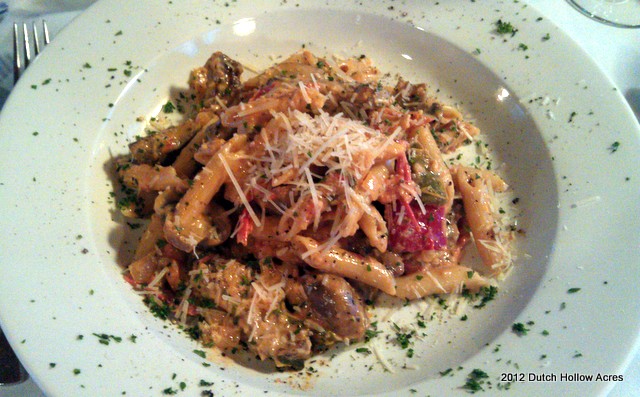
The first night away went smoothly, no calls from back home at all, we were able to enjoy a nice dinner out on the WW Durant.  Earlier in the week we had shipped off some of our alpaca to the chef and he prepared us a wonderful roasted red pepper, mushrooms and alpaca pasta dish.  YUMMY!  It was awesome to have such a great chef prepare our own meat for us and to be able to enjoy a scenic ride on Raquette Lake too.

The next day we recovered from our excess food and drink and hooked up with a friend to go out and see a movie.  Something as simple as going to a movie theater is often difficult and we hadn’t been out to a film in over 2-3 years!   20 minutes into the flick I remembered why.  Ring Ring! Uh oh, it’s the farm watcher!  Dashing to the back of the theater and out the door we answered the call.  The foul weather had blown down some of the fence and though the alpacas were still “contained” they would easily be able to get out.   I walked her through getting some grain and herding them back into the dirt paddock and locking them in.   Crisis averted!

The rest of the weekend seemed to go smoothly and dreams and wishes of a vacation home in the mountains filled our head.   Would it be possible to do these mini weekends away more frequently?   The thought consumed us on our drive home and we had it planned out how we could manage a farm and time off and were convinced we could manage both by the time we pulled into the driveway.

As we walked through the front door we were greeted with a story of how just a short time ago, one of the alpacas managed to cram their body through a small hole under the fence and wiggled their way to freedom.   The tale of how the escape artist was chased and captured retold to the delight of the farm sitter and to the realization there would never be a vacation home in the mountains for me.  *sigh*

Hey Mr. Weatherman

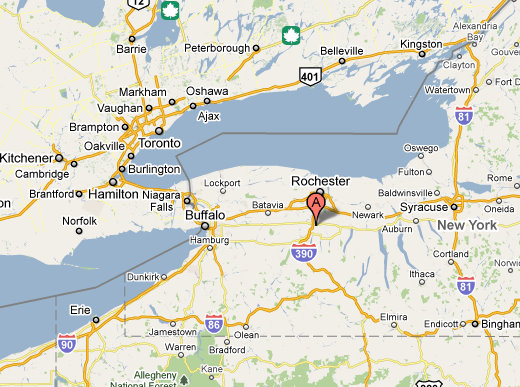
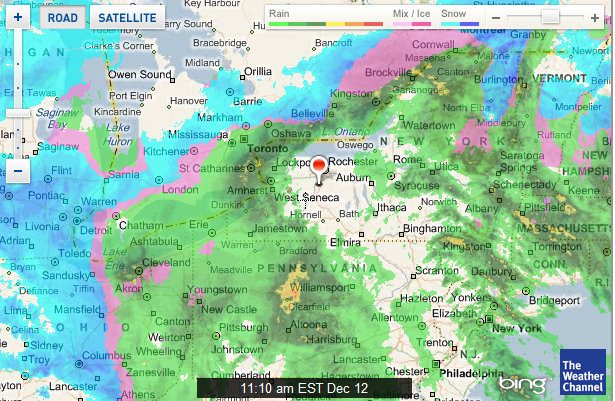
The town I live in is south of Lake Ontario and East of Lake Erie.  These 2 Great Lakes often give us what is called lake effect snow.  In short, the lakes are warm, cold air passes over them picking up moisture and then impolitely dumps it on those of us downwind from the lake.

Avon, NY
That's us!

Thankfully the little town I live in is just out of reach of the snows created off each lake.  I like to refer to our weather as the donut effect.  When you watch the weather maps in motion you can see a little donut hole around our town.  We typically miss everything. So, when Mr Weatherman was talking about 4-6” of snow last night with blowing wind (blah blah blah) I totally ignored it.  Why? Let me put it this way.  I’ve plowed 1x all winter yet the City of Rochester just north of me has had over 80+ inches of snow so far this season.

donut_effect_weather
Seriously, this is how our weather usually looks. Our little farm is in a donut hole. From this storm we got NOTHING! Not even rain.

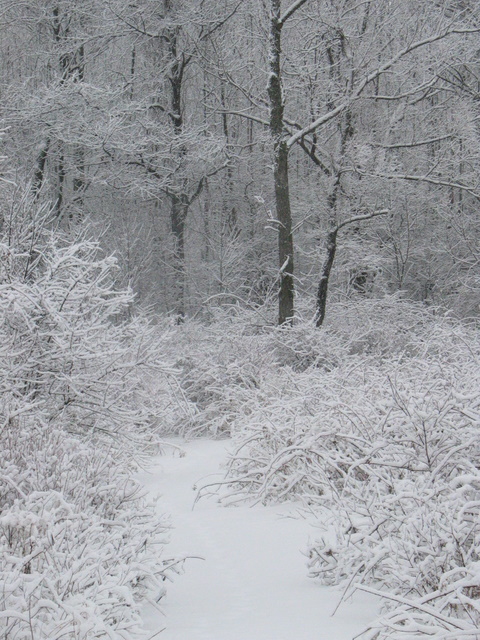
Needless to say when I woke up this morning thinking I had plenty of time for my usual chores list I was in shock to see snow.  Thanks to the wind it wasn’t just 4-6 inches but more like 1-2 feet!  Errrrr!  It’s now 5am and I have to leave in 2 hours to get to work on time. Great.

To complicate my chores even more I didn’t put the new round bale out last night thinking I’d have plenty of time this morning so that was 1st on the to do list; especially since I wanted to test out the new Slow Bale Buddy.  I bundled up, put on my muck boots and bulldozed my way to the workshop.  Of course the blowing snow was a good foot or more up the barn door so I wiggled and pushed and shoveled until I could finally slide the door open. 

Once in, I plugged in the tractor so it could warm up and put the new Slow Bale Buddy in the bucket so I could bring it with me.  I then proceeded to bring in the horses and feed everyone as well as brush off the plow truck and warm it up.

20 minutes later I came back to the tractor and was ready to go get my bale.  Totally forgetting I had the Slow Bale Buddy in the bucket I thought to myself… “self, wouldn’t it be a good idea to use the tractor to clear the snow away from the workshop as I leave?”  Oh yeah, great idea Einstein and I proceeded to clear snow with the tractor. 

It wasn’t until I got to the hay barn that I realized that I just buried my new Slow Bale Buddy under a mountain of snow!  NOOOO!  I went back to look for it but, a new white hay net, in a pile of snow is not easy to find. So I gave up, I guess I’ll just have to use my Bale Buddy again instead.

Hmm. Where is my big green bale buddy?  Oh yeah, buried in the snow somewhere in the pasture. *grumble*  Out I went with the tractor and dug up the bag and dragged it back to the barn for the new bale.  

It turns out maneuvering deep snow in a tractor isn’t as much fun as it seems.  Even with 4×4 the tractor would just slide sidewise or not turn at all.  It was also unnerving when I’d be pushing through the snow in the pasture and then hit a frozen poop pile and get bumped all over especially since I can’t put the roll-bar up.  Mental note, new hay barn needs a minimum of 12’ ceiling, 14’ would be even better.

I finally did manage to complete all my usual morning chores, shovel the walkways, plow the unforgiving long driveway, plow my mom’s driveway, before quickly changing and heading off to work.

As for my test of the Slow Bale Buddy, well, that’ll just have to wait until I find the darn thing in the snow mountain.

Dutch Hollow Acres Trails